Saving Animals

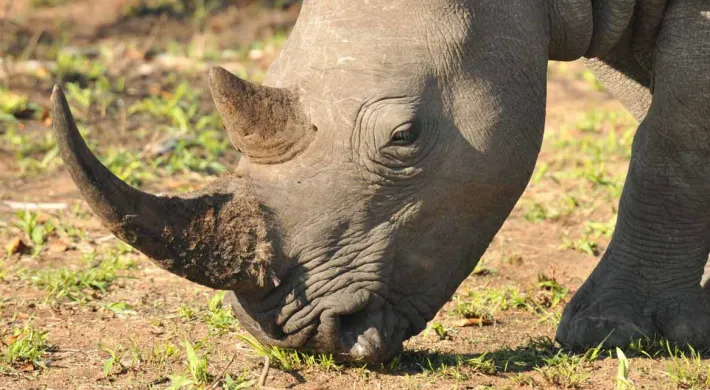
Closeup of a Rhinoceros head bent down and grazing on some grass in an open field, its sharp primary horn and smaller, secondary horn are prominently displayed on its nose.

On the front lines: Scaling SMART conservation technology to protect rhinos in Namibia

North Carolina Zoo has worked for years with several partners in the region to implement an anti-poaching program based on SMART conservation software that the Zoo helped develop.

Learn More
A man in a light brown shirt stands by a tan off-road vehicle in a savanna-like setting, looking at a dark-colored phone. The background shows sparse vegetation, green trees, and a clear blue sky.

At the front lines: An introduction to our SMART approach

When I started doing wildlife conservation research more than 20 years ago, going to the field and collecting data was very different.

Learn More
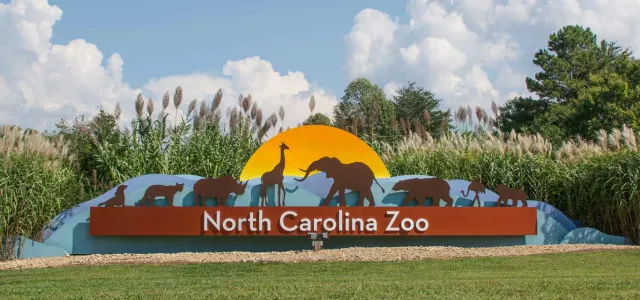
The North Carolina Zoo's entrance sign. The sign features a large, horizontal brown panel with "North Carolina Zoo" in white text. Above this panel is a curved silhouette of various animals—including a giraffe, elephant, bear, and several others—set against a bright orange and yellow sun disk. It is surrounded by tall, dry grasses under a blue sky with fluffy white clouds.

Saving Animals Around the World

From the African Bush to the Piedmont: Saving Animals at Home and Around the World


Learn More
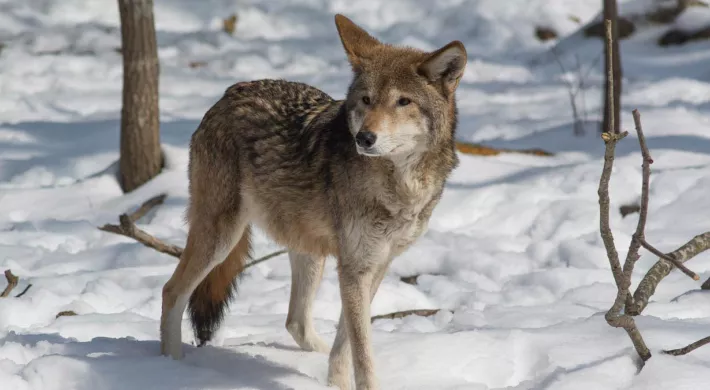
A Red Wolf with a mix of brown and gray, fur stands in a snowy landscape, looking alertly to its right. The animal has pointed ears and a bushy tail, and sparse trees and branches are visible in the background.

The American Red Wolf – Excerpt from Alive Magazine - Winter 2019

The American Red Wolf is the Most Endangered Canid in the World

Learn More