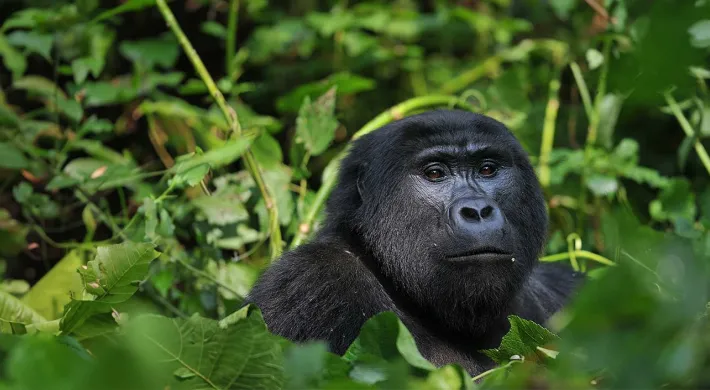

Meet Our Bachelor Troop
When visiting the gorillas at the North Carolina Zoo, you might see Mosuba, Dembe or Hadari resting in fluffy nests in the shade, Apollo foraging for fresh veggies on a climbing structure, or Bomassa participating in a training session with one of his zookeepers at the habitat training wall. Our gorilla troop is a little different. While in their native habitats, gorillas would typically live in groups of one adult male and several females and their offspring, we are home to a troop of five male western lowland gorillas. We house a “bachelor group” so that male gorillas under human care who cannot be paired with females can still live in a social environment. Maintaining an all-male troop requires careful observation and a strong understanding of gorilla behavior. Keepers watch for changes in relationships and hierarchy and provide the gorillas with enrichment to encourage natural behaviors. Our gorillas live under the care of a very dedicated team, but the Zoo’s commitment to gorillas extends far beyond what you see in front of you.
Rethinking the Gorilla Diet
In 2008, our Zoo pioneered a “chow-free” diet for gorillas in zoos. Traditional gorilla diets include commercially produced primate biscuits (chow). While these biscuits contain a variety of vitamins and minerals, they are also high in calories and carbohydrates.

Because heart disease is a major health concern for gorillas in human care, Zoo staff developed a diet that better mimics what gorillas eat in their natural habitats: lots of leafy greens, high-fiber vegetables, fresh browse (leafy tree limbs and stems), limited amounts of fruits and starchy vegetables, and most importantly, no chow. Our gorillas now eat approximately 140-150 pounds of produce each day! That’s an enormous amount of salad, but that high-fiber diet is important for keeping them healthy and encouraging more natural foraging behaviors.
Training Built on Trust
Our gorillas can also choose to participate in training for their own medical care. Through trust-building with their caretakers, the gorillas have learned behaviors that allow keepers and veterinary staff to monitor their health with less stress. The gorillas voluntarily participate in blood pressure and EKG monitoring, blood collection, stethoscope examinations and even teeth brushing! These behaviors are part of the Zoo’s commitment to providing excellent care based on each gorilla’s individual needs. What we learn from this also contributes to a larger body of knowledge about gorilla health, behavior, and welfare.

Conservation Beyond the Zoo
Our commitment to gorillas doesn’t stop at the edge of their habitat, though. The North Carolina Zoo works to protect gorillas in their native ranges, too. Our Zoo was one of the founding members of AZA SAFE Gorilla, a collaborative conservation program of the Association of Zoos and Aquariums (AZA). SAFE stands for Saving Animals From Extinction, and it brings zoos, aquariums and conservation partners together to address threats facing wildlife.
The North Carolina Zoo has held leadership roles in SAFE Gorilla since its beginning in 2015, and today, our Deputy Director and Chief Mission Officer, Dr. Rich Bergl, serves as the Vice Program Leader. This work is especially important because gorillas face serious threats across their native ranges and are considered critically endangered by the International Union for Conservation of Nature (IUCN) Red List. The IUCN Red List is the world’s leading source of information on how threatened an animal or plant is.
So, you might wonder, what does a zoo have to do with gorillas in the wild? Through SAFE Gorilla, resources and expertise are gathered to support organizations working directly with wild gorillas and the communities that share their habitat. Our Zoo contributes yearly financial support, technical expertise, and support for monitoring systems for the Dian Fossey Gorilla Fund in Rwanda and the Wildlife Conservation Society (WCS) in Nigeria.


Finding the Gorillas You Can't See
One example of our Zoo’s contribution to SAFE Gorilla is our long-standing work with WCS to protect the Cross River gorillas. There are four subspecies of gorillas: western lowland (the ones you will see in all AZA-accredited zoos), Cross River, Grauer’s, and mountain gorillas. While all gorillas face serious threats, the Cross River gorillas are the most critically endangered with only around 250-300 individuals. These gorillas are notoriously difficult to observe in the wild. They are elusive, living in dense, mountainous forests, and researchers cannot simply walk through the forest and count every gorilla they find. So how do you get an accurate count of a gorilla you can’t see? Since researchers cannot count the actual gorillas, they instead look for the evidence the gorillas leave behind.
North Carolina Zoo worked with WCS to collect and analyze fecal samples from the Cross River gorilla habitats. The genetic information contained in these samples helped researchers identify individual animals and better understand the status and size of their population. In other words, a gorilla doesn’t have to be standing in front of us to tell us something important about their population. This, and other information our Zoo has contributed, helped to update the IUCN Red List assessment for the Cross River gorillas.

Did you know you can help gorillas too?
Gorilla conservation may seem like something that happens thousands of miles away in places most of us will never visit, but there are ways to make a difference right here in North Carolina. The Zoo participates in Gorillas on the Line, a project which encourages people to recycle old cell phones and other electronic devices. Many electronics contain minerals that are mined in areas where gorillas live. Recycling these devices raises money to directly support gorilla conservation through the SAFE Gorilla program and reduces demand for new materials. The Zoo accepts used electronics for recycling year-round, not just during the campaign period, so our guests can have more opportunities to be a part of our gorilla conservation story.

The five gorillas who call the North Carolina Zoo home give us all an opportunity to see these remarkable animals up close and learn about their behavior, health, and individual personalities. But the story doesn’t end with the gorillas you see in front of you. The knowledge we gain from their care also connects us to a much larger effort to protect their relatives living in the forests of Africa. From the food we provide and the behaviors we study, to the technology we share and the conservation partners we support, the work we do here in Asheboro, North Carolina reaches far beyond our Zoo into the forests of Africa to ensure that gorillas in their native habitats continue to have a future.